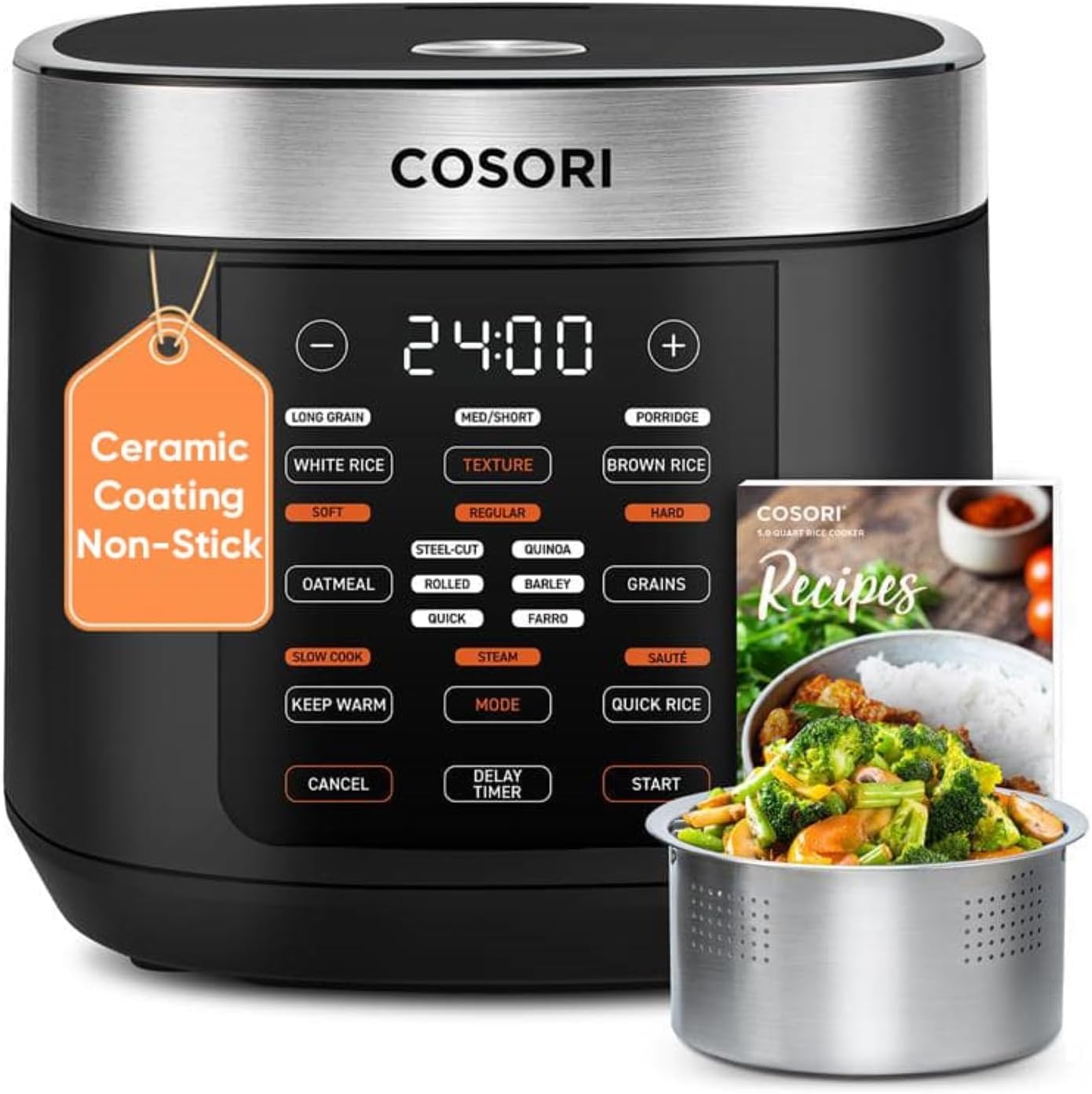
The evolution of kitchen appliances has created an interesting category of devices that occupy the space between single-purpose tools and fully-featured cookers. The Cosori 10-Cup Rice Cooker represents this middle ground—a device that begins with rice cooking as its foundation but expands to encompass numerous other cooking methods through its 18 built-in functions.
Understanding what this device brings to the kitchen requires examining both its core capabilities and its expanded functionality. Unlike basic rice cookers that handle primarily one task, this model integrates multiple cooking approaches into a single unit. For some households, this expanded versatility transforms how meals come together. For others, the additional features remain largely unused. This guide explores the practical dimensions of the appliance to help you understand whether its capabilities align with your cooking patterns and kitchen needs.
Core Technology: Fuzzy Logic and What It Means
The term “fuzzy logic” appears frequently in product marketing but often without clear explanation. Understanding this concept illuminates how this particular appliance operates differently from simpler cooking devices.
Fuzzy logic refers to a control system that makes real-time adjustments based on multiple sensor inputs rather than following a predetermined program. In the context of rice cooking, this means the appliance continuously monitors factors like temperature, steam levels, and heating patterns throughout the cooking cycle. If conditions suggest the rice is cooking faster than expected, it adjusts heat accordingly. If it detects cooking is progressing more slowly, it compensates.
This approach contrasts with traditional timer-based cooking, where the appliance applies heat for a set duration regardless of actual conditions. Fuzzy logic systems theoretically produce more consistent results across different rice varieties and water conditions because they’re responsive rather than prescriptive.
The practical implication is that variations in initial water temperature, rice variety, and even altitude theoretically matter less with fuzzy logic because the system continuously corrects during the cooking process. Whether this produces noticeably different results in home cooking environments versus standard settings remains somewhat subjective and dependent on individual preferences.
Detailed Feature Overview
Capacity and Physical Dimensions
The 10-cup capacity represents a significant step up from smaller models, making it suitable for larger households, frequent entertaining, or anyone regularly batch-cooking grains for the week ahead. In practical terms, this capacity translates to preparing rice for 8-12 people in a single batch, though actual servings depend on portion sizes and whether rice is the sole component of a meal or part of a larger array of dishes.
The larger capacity has implications beyond just quantity. It affects how the cooking environment changes inside the pot—with more rice and water, heat distribution patterns differ from smaller quantities. This is one reason why appliances are often tested at their intended capacity ranges; scaling recipes up or down significantly can sometimes affect results.
Ceramic Non-Stick Interior
The inner cooking pot uses ceramic coating rather than the traditional Teflon-based non-stick surfaces found in many appliances. Ceramic coatings represent a different approach to preventing food sticking and have become increasingly common in cookware and cooking appliances.
The appeal of ceramic lies partly in perception—some users prefer it because it’s derived from natural mineral sources rather than synthetic polymers. From a functional standpoint, ceramic coatings perform similarly to traditional non-stick in many situations but have different durability characteristics. Ceramic coatings tend to resist high-heat wear well but can be more susceptible to damage from metal utensils or sudden temperature changes. This means careful handling and appropriate cleaning methods matter more with ceramic surfaces.
The non-stick property, regardless of coating type, primarily affects how easily food releases from the pot and how much food residue builds up over time. Less sticking means easier cleaning and potentially less food waste, though a well-functioning non-stick coating requires proper care.
The Steamer Basket
The included stainless steel steaming basket enables simultaneous cooking of grains and other items above them. Stainless steel is a practical choice for steaming equipment because it resists corrosion from steam and doesn’t impart flavors to foods being steamed.
The steaming basket allows adding vegetables, proteins, or other items to the cooking process without touching the grain cooking below. This capability transforms the appliance from a grain-only tool into something approaching a complete meal preparation unit. Vegetables like broccoli, carrots, or leafy greens can steam while rice cooks, theoretically allowing a prepared grain and vegetable component simultaneously.
Extended Keep Warm Duration
The 24-hour keep warm capability represents extended functionality compared to standard models that might maintain warmth for 4-8 hours. This extended window means rice remaining in the appliance maintains an edible temperature for a full day, useful for households where people eat at very different times or for situations where meal timing becomes unpredictable.
Notably, a 24-hour warm period means the appliance uses electricity continuously for that duration. For users focused on energy consumption, this represents a meaningful consideration—the device isn’t dormant during the warming phase but actively maintaining temperature.
Understanding the 18 Cooking Functions
Rather than being a bewildering array of options, the 18 functions generally break down into categories, each addressing different cooking approaches or rice varieties.
Grain-Focused Functions
Several functions address different rice types—white rice, brown rice, sushi rice, jasmine, arborio, and similar varieties. Each setting theoretically adjusts temperature and time to suit each grain’s specific cooking requirements. Additionally, functions exist for non-rice grains like quinoa, wild rice, and mixed grains. This extensive grain coverage makes the appliance practical for households that rotate between different grains based on meals or dietary approaches.
Cooking Method Functions
Beyond basic cooking, the appliance includes sauté capability—the ability to heat the pot to higher temperatures for browning ingredients before switching to cooking mode. This proves useful for rice dishes like risotto or paella that begin with sautéing aromatics or proteins.
A slow cooker function transforms the appliance into a slow-cooking device, applying lower heat over extended periods. This appeals to people who use slow cooking for tougher cuts of meat or long-simmering stews, expanding the appliance’s role in meal preparation.
Specialized Settings
Functions also exist for specific applications—congee or porridge cooking, which requires different water ratios and timing than regular rice; soup functions for liquid-heavy dishes; and specialized settings for less common grains or cooking approaches.
While 18 functions provide extensive options, the practical reality is that most users gravitate toward 3-5 functions they use regularly. The remaining options appeal to specific cooking situations or dietary approaches that may not be relevant to everyone’s routine.
Practical Applications and Cooking Scenarios
Everyday Grain Preparation
The most straightforward use case involves regular rice cooking for family meals. The larger capacity handles feeding multiple people with a single batch, reducing how often the appliance needs to be used compared to smaller models. For households that consume rice several times weekly, this efficiency matters.
Meal Prep and Batch Cooking
The 10-cup capacity makes the appliance practical for batch cooking—preparing large quantities of grains once or twice weekly for use in multiple meals. This approach appeals to people prioritizing meal planning efficiency or those following approaches like meal prepping where preparing components ahead of time streamlines weeknight cooking.
Simultaneous Cooking with the Steamer Basket
Using the steamer basket while the grain cooks below represents a meaningful efficiency gain. Preparing both a grain and vegetable component simultaneously in one appliance means fewer pots requiring cleanup and reduced active cooking time. Scenarios like steaming broccoli over jasmine rice or asparagus over quinoa become straightforward single-appliance operations.
Sautéed Grain Dishes
The sauté function enables preparing rice-based dishes that benefit from preliminary browning. For risotto, paella, or pilaf-style preparations where rice is browned before cooking, the sauté function eliminates the need for a separate pan. Users brown ingredients, add liquid, and switch to cooking mode for the remainder of the process.
Slow Cooking and Stew Preparation
The slow cooker function opens possibilities beyond rice—bone broth preparation, tough cut cooking, long-simmering stews, and similar applications that benefit from extended low-heat cooking. For people who regularly slow cook, having this capability integrated rather than requiring a separate appliance saves both counter space and equipment investment.
Porridge and Congee
The congee function represents something distinctly different from standard rice cooking. Congee preparation requires different water ratios and cooking times compared to regular rice. Having a dedicated function means proper adjustments happen automatically rather than requiring manual intervention or guesswork. This appeals particularly to families where congee is a regular breakfast or comfort food.
Identifying Suitable Users
Larger Households
The 10-cup capacity makes particular sense for households with five or more regular residents. Smaller families might find this capacity larger than necessary, meaning rice left over requiring refrigeration after meals. However, households where grains feature prominently in regular meals can consume 10 cups of cooked rice across multiple servings, making the capacity practical rather than excessive.
People Embracing Multiple Cooking Methods
Users comfortable exploring different cooking approaches—slow cooking, sautéing, steaming, regular cooking—benefit more from the extended function set than those seeking a single-purpose tool. If you regularly prepare multiple cooking styles, consolidating methods into one appliance becomes increasingly valuable.
Batch Cooking Practitioners
Meal prep enthusiasts or people planning multiple meals in advance find the larger capacity particularly practical. Preparing grains once or twice weekly for multiple meals requires capacity that handles 6-10 servings at once without multiple batches.
Households Exploring Global Cuisines
Families regularly preparing foods from different culinary traditions often rotate between different grain types. Italian risotto follows by Japanese sushi rice followed by Indian basmati and Thai jasmine represents a common pattern. Having dedicated functions for various grains removes the variability from these transitions.
Those Prioritizing Multi-Use Appliances
If minimizing countertop equipment and overall kitchen footprint matters to you, an appliance that handles grain cooking, steaming, sautéing, and slow cooking reduces the number of separate devices required. This appeals particularly to people with limited counter space or those preferring minimal clutter.
Practical Limitations and Realistic Considerations
Counter Space Requirements
A 10-cup rice cooker represents a substantial countertop appliance. Unlike compact models that might fit easily into cabinet storage, a device this size typically remains on the counter when in regular use. If space is at a premium, this consideration becomes significant.
Complexity vs. Simplicity
While 18 functions provide flexibility, they also introduce complexity compared to simpler models. Users must navigate menus, select appropriate functions, and understand how different settings work. For someone seeking the absolute simplest operation, a basic rice cooker requires less learning curve.
Learning Curve for Specialty Functions
The sauté, slow cooker, and congee functions work differently from basic cooking mode and require understanding how to use them appropriately. Preparing risotto, for instance, involves steps beyond just pressing a button. Users must know when to add ingredients, how long sautéing should occur, and when to transition to cooking mode. This isn’t difficult but does require initial learning.
Ceramic Coating Care Requirements
The ceramic non-stick surface requires appropriate handling. Metal utensils, abrasive scrubbing, or thermal shock from sudden temperature changes can damage the coating. Users must commit to proper care protocols—using wooden or silicone utensils, gentle cleaning, and avoiding extreme temperature transitions—to maintain the non-stick functionality over time.
Electricity Consumption
The 24-hour warm function means the appliance draws power continuously for that period. Extended warming is convenient but not energy-efficient compared to allowing rice to cool and reheating when needed.
Limited Advanced Features
Despite the 18 functions, some users expect features found in more expensive multicookers—pressure cooking, multiple heating elements for even distribution, or advanced programming options. This model focuses on standard heating approaches, which is less advanced but often easier to use.
Comparing Multicooking Appliance Categories
Understanding how this model relates to other cooking devices helps contextualize its strengths and limitations.
Rice Cookers vs. Instant Pots and Pressure Cookers
Pressure cookers operate using steam pressure to raise cooking temperatures above standard atmospheric levels, enabling faster cooking. Instant Pots and similar devices combine pressure cooking with multiple other functions. The trade-off is that pressure cookers are more complex to operate, require careful monitoring of pressure levels, and involve more elaborate cleaning procedures. Rice cookers heat at standard atmospheric pressure, cooking more slowly but with less complexity. For people seeking simplicity and standard cooking methods, a rice cooker works well. For those wanting maximum speed and highest versatility, pressure cookers offer more capability.
Rice Cookers vs. Dedicated Slow Cookers
A dedicated slow cooker often provides better temperature control and more precise low-heat cooking than a slow cooker function in a multicooker. Additionally, a dedicated slow cooker might offer larger capacity or more even heat distribution. However, an integrated slow cooker function eliminates needing separate equipment, which appeals to space-conscious kitchens.
Rice Cookers vs. Stovetop Methods
Stovetop cooking requires pots you likely already own and provides complete control over cooking conditions. It demands active attention and monitoring but uses no dedicated equipment. Rice cookers automate the process but require purchasing and storing an appliance. The decision ultimately depends on whether you value convenience and consistency enough to justify dedicated equipment.
This Model vs. Simpler Rice Cookers
Basic rice cookers typically offer one or two cooking functions and minimal programming. They’re simpler to use and take up less space but provide less flexibility for varied cooking approaches. This model adds capability but introduces more complexity and requires more counter space. Neither approach is objectively better—the choice depends on your specific cooking needs.
Frequently Asked Questions
What’s the difference between white and brown rice settings?
Brown rice has an outer bran layer that requires longer cooking and higher temperatures to soften compared to white rice. The dedicated brown rice setting adjusts both cooking time and temperature to accommodate this. Using the white rice setting for brown rice typically results in undercooked brown rice with an undesirably chewy outer layer.
Can I cook different foods simultaneously in the main pot and steamer?
Yes, though planning matters. Both the main pot and steamer finish cooking based on their respective timers. You need the rice cooking time to align reasonably well with whatever you’re steaming. A 20-minute grain won’t coordinate well with a 45-minute slow-cooked item, but grain and steamed vegetables finishing around the same time work well together.
How does the fuzzy logic system actually affect my cooking?
Fuzzy logic makes adjustments during the cooking cycle based on real-time monitoring. In practical home cooking, this often means slightly more consistent results across different water conditions and rice varieties. Whether you notice a meaningful difference depends on how particular you are about texture consistency and how variable your typical cooking conditions are.
Is the ceramic coating safer than traditional non-stick?
Modern non-stick coatings in quality appliances are considered safe by health authorities when used as directed. Ceramic and traditional coatings have different properties but similar safety profiles when functioning properly. Damaged coatings—whether ceramic or traditional—might be problematic, which is why proper care matters regardless of coating type.
Can I really slow cook in this appliance?
Yes, the slow cooker function applies consistent low heat over extended periods, similar to dedicated slow cookers. The main difference is that dedicated slow cookers often provide more uniform heat distribution and might maintain slightly different temperature ranges. For basic slow cooking, the integrated function works adequately, though some users report slightly less even cooking compared to dedicated devices.
How often should I replace the inner pot?
With proper care, the ceramic coating should last years under normal use. If the coating becomes damaged and peels significantly, replacement becomes advisable since the non-stick benefit disappears and bare spots might interact with food or water differently. Replacement pots are available separately from the manufacturer or retailers.
What water-to-grain ratios work best?
Water ratios depend on the specific grain and preferred texture. Package directions provide starting points, and most grain packages include recommended ratios for different cooking methods. The appliance manual likely includes ratio charts for various grains. Experimentation helps dial in your preferences since cooking conditions and personal texture preferences vary.
Does the extended warm function dry out rice?
Rice can gradually lose moisture during extended warming, especially in drier climates. If rice sits warming for a full 24 hours, some texture degradation might occur. For extended warming, using shorter periods when possible helps maintain better texture.
Can I use the sauté function for other tasks besides rice dishes?
The sauté function essentially heats the pot to temperatures suitable for browning. You can brown vegetables, proteins, or other ingredients. However, the interior dimensions are designed for cooking applications rather than extensive sautéing, so anything you’d typically prepare in the sauté function for subsequent cooking works fine, but dedicated sautéing beyond this scope might not be ideal.
What happens if I don’t use most of the functions?
Nothing problematic occurs. You simply use the functions relevant to your cooking and ignore the rest. Many users gravitate to 3-5 functions they employ regularly while never touching the others. The extra functions provide flexibility for when needs change, but they’re optional rather than required.
Conclusion
The Cosori 10-Cup Multicooker represents an appliance designed for households that view rice cooking as important but also appreciate flexibility for other cooking approaches. Its primary appeal lies in capacity and integrated functionality—handling grain preparation while simultaneously steaming vegetables, or switching between cooking methods for different meal types without requiring multiple devices.
Whether this appliance suits your needs depends less on the list of functions and more on your actual cooking patterns. A household that cooks rice frequently, regularly prepares multiple cooking styles, and has adequate counter space finds the extended capabilities meaningful. A smaller household, someone unconcerned with non-rice cooking, or those with minimal counter space might find a simpler model better suited.
The fuzzy logic system, ceramic coating, and extended warm period represent meaningful engineering choices that affect how the appliance performs, though practical differences might be subtle depending on your cooking conditions and preferences. Like any appliance, its value ultimately stems from how you actually use it rather than from the features themselves.