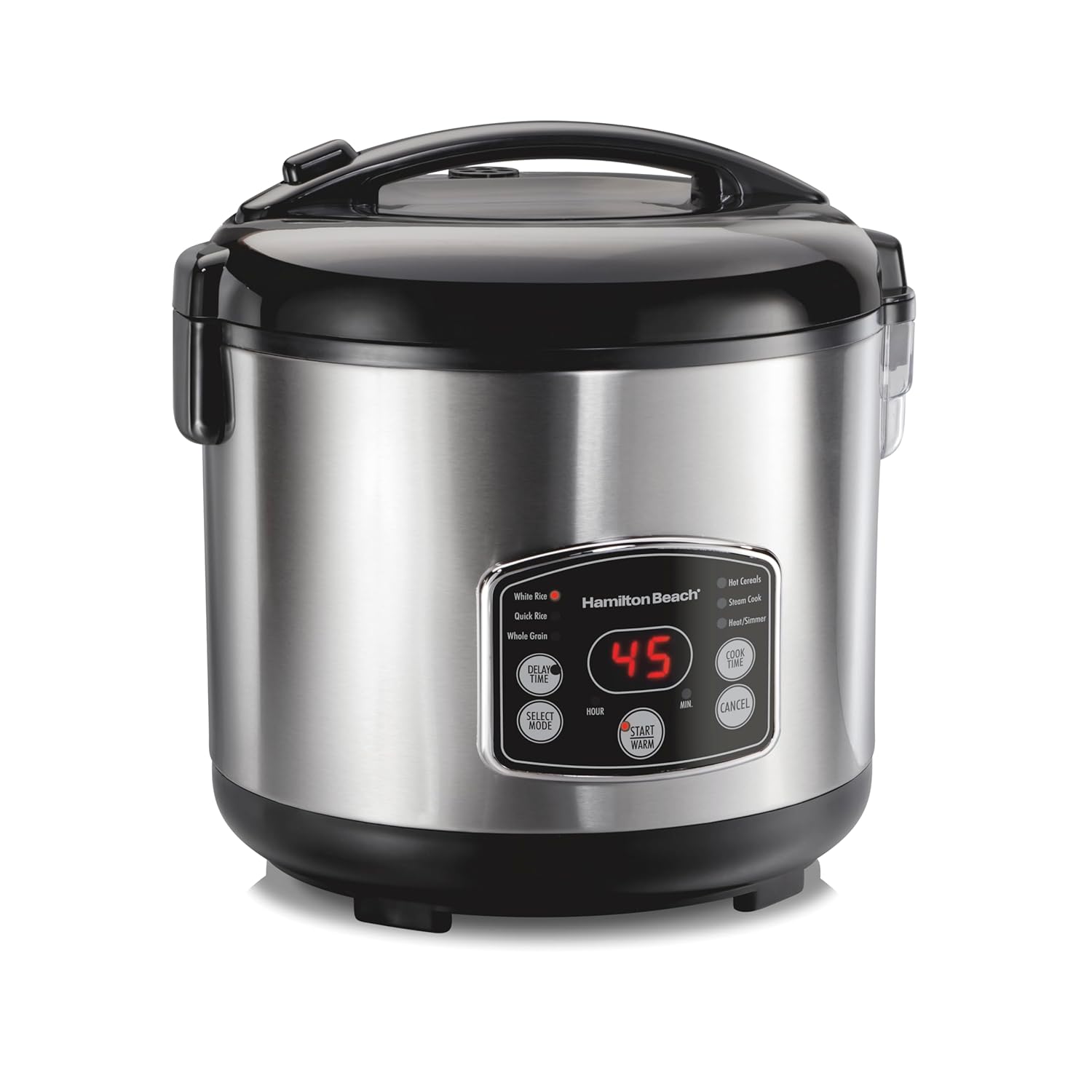
The kitchen appliance market has witnessed substantial growth in the rice cooker category over the past decade, with manufacturers increasingly adding features and capacity to appeal to diverse household needs. The Hamilton Beach Digital Programmable Rice Cooker stands out in this landscape primarily because of its substantial 7-cup uncooked capacity—translating to 14 cups of cooked rice—paired with practical dual-basket functionality designed for simultaneous grain and vegetable preparation.
For larger households, frequent entertainers, or anyone regularly preparing grains in significant quantities, capacity considerations often outweigh the appeal of minimal features. This particular model prioritizes serving volume while maintaining straightforward operation and practical design elements. Understanding what capacity truly means, how the dual-basket system functions, and whether this approach aligns with actual cooking needs requires moving beyond specification sheets into realistic kitchen scenarios.
This guide explores the practical dimensions of the Hamilton Beach model to help you evaluate whether its substantial capacity and functional design address your specific cooking requirements.
Understanding Capacity in Real-World Terms
Before examining specific features, understanding what 7-cup uncooked capacity actually represents contextually matters significantly. The difference between a 4-cup and 7-cup uncooked capacity isn’t merely 75 percent more rice—it fundamentally changes how the appliance integrates into household cooking.
A 7-cup uncooked capacity yields approximately 14-16 cups of cooked rice, depending on rice variety and water ratios. For perspective, this quantity feeds roughly 12-16 people with a standard single-serving portion of rice as a side dish. For a family of four, this represents approximately 3-4 days of rice servings, making batch cooking an efficient use of the appliance’s capacity. For a smaller household, this capacity might actually be excessive unless you regularly entertain or practice significant meal preparation in advance.
The practical implication is that larger capacity appliances suit specific household patterns rather than being universally superior. A household that cooks rice multiple times weekly will efficiently use this capacity. A household that cooks rice occasionally might find the surplus capacity less practical, requiring rice storage in the refrigerator after cooking or accepting that the appliance sits unused for extended periods.
Understanding your actual consumption patterns provides essential context for evaluating whether the investment in larger capacity makes sense for your situation.
Key Design and Functional Features
The Dual-Basket System
The distinguishing feature of this model involves two separate baskets—one designated for steaming foods and another specifically designed for rinsing rice. This dual-basket approach represents a departure from simpler models that might include only a steaming basket or no secondary baskets at all.
The rinse basket functions as a pre-cooking preparation tool. Rather than rinsing rice in a separate bowl and draining it (a process that can be tedious and messy), rice goes directly into the rinse basket. You fill the main pot with water, place the rinse basket inside the pot, add rice to the basket, and rinse by rinsing the basket contents while they’re positioned above the water. The water drains through the basket, rinsing the rice without requiring separate equipment or creating spillage concerns.
This design addresses a practical pain point in rice preparation. Many cuisines recommend rinsing rice before cooking to remove excess starch, affecting final texture. The included rinse basket makes this step convenient rather than requiring separate cleanup steps.
The steaming basket operates separately and allows placing vegetables, proteins, or other items above the water level during the cooking cycle. This enables simultaneous preparation of steamed components alongside the rice or grains cooking below.
Digital Programming Interface
Rather than mechanical buttons and dials, this model employs a digital interface for selecting cooking functions and programming. Digital controls typically offer more precise adjustment capabilities and often include programming options unavailable with mechanical systems.
The programming capability allows setting cooking to begin at a later time—useful for situations where you want rice ready at a specific time without being present to start the appliance. This delayed-start feature adds flexibility for households with staggered meal times or people coordinating meal preparation with other kitchen activities.
Programmable Cooking Functions
The appliance includes pre-programmed settings for different rice varieties and cooking approaches. Rather than single-setting operation, dedicated functions adjust temperature and timing for white rice, brown rice, and potentially other grains or cooking methods. This automation removes variability from cooking conditions that differ between rice types.
Automatic Warming Function
After cooking completes, the appliance automatically transitions to a warming mode that maintains temperature without further cooking. This function allows cooked rice to remain at serving temperature for extended periods, useful when family members eat at different times or when entertaining guests with staggered arrivals.
Internal Heating Design
The heating mechanism typically includes a heated bottom element that warms the cooking pot from below. This standard configuration promotes relatively even heat distribution throughout the cooking liquid and contents, important for consistent grain preparation.
Practical Applications and Cooking Scenarios
Batch Preparation and Meal Planning
The 7-cup uncooked capacity makes this appliance particularly practical for batch cooking—preparing large quantities of grains once or twice weekly for use across multiple meals. Someone following a meal-planning approach might prepare a week’s worth of grain components in two or three cooking sessions, then portion and refrigerate for use throughout the week.
This efficiency appeals especially to people managing busy schedules, those following specific dietary approaches requiring careful component tracking, or anyone wanting to reduce weeknight cooking complexity by preparing components in advance.
Family Meal Preparation
For households with five or more regular residents, this capacity aligns well with typical family meal consumption. Preparing rice as a side for family dinner with this capacity reduces how frequently the appliance requires use compared to smaller models. For families regularly cooking rice, this efficiency translates to meaningful time savings across weeks and months.
Simultaneous Vegetable Preparation
The dual-basket functionality enables preparing a complete meal component combination—steaming broccoli, carrots, or other vegetables in the top basket while rice cooks in the main pot below. This approach consolidates meal preparation into a single appliance, reducing cookware quantity and cleanup requirements.
Steaming vegetables simultaneously with rice cooking works particularly well for dishes where both components finish at approximately the same time. Asian grain and vegetable combinations, Mediterranean rice and vegetable sides, or similar preparations benefit from this integrated approach.
Rice Rinse Integration
The dedicated rinse basket streamlines the rice preparation process. Rather than rinsing rice in a colander then transferring it to the cooking pot, you rinse it in the basket positioned above the cooking water. This eliminates a separate washing step and consolidates the preparation process, reducing the number of items requiring cleaning after cooking.
Extended Grain Variety
While rice dominates grain cooking in many households, people exploring diverse cuisines or dietary approaches often rotate between different grains—quinoa, barley, millet, farro, and others. The larger interior space of a 7-cup capacity appliance provides more flexibility for experimenting with less common grains that might require different water ratios or cooking times than standard rice.
Identifying Suitable Households and Cooking Patterns
Larger Families
Households with six or more residents represent the most natural fit for 7-cup uncooked capacity. Cooking rice regularly for this many people makes efficient use of the appliance’s substantial size without requiring multiple batches or leaving excess quantities.
Regular Rice Consumers
Some households consume rice multiple times weekly as a dietary staple, while others prepare it occasionally for specific meals. Regular rice consumers benefit from larger capacity that accommodates their consumption patterns without requiring more frequent use of the appliance.
Batch Cooking Practitioners
People who prepare meals in batches—whether following structured meal-planning approaches or simply preferring to consolidate kitchen time—find larger capacity particularly practical. The ability to prepare 14 cups of cooked rice in a single session suits someone preparing components for multiple future meals.
Home Entertainers
People who regularly host gatherings and serve meals to guests benefit from larger capacity. Preparing substantial quantities of rice for entertaining becomes more efficient with a single batch in a large-capacity appliance rather than multiple batches in smaller units.
Diverse Cooking Approaches
Households exploring multiple cooking styles and cuisines often work with various grain types and cooking methods. The larger interior dimensions provide flexibility for experimenting with specialty grains, different water ratios, and varied cooking applications.
Space-Conscious Multitaskers
While the appliance itself occupies meaningful counter space, its ability to simultaneously handle rice and steamed vegetables reduces overall kitchen complexity. Instead of managing a rice cooker and steaming pot separately, this integrated approach consolidates equipment in space-conscious kitchens.
Important Practical Considerations
Counter Space Reality
A 7-cup uncooked capacity appliance represents a substantial countertop presence. Unlike compact models that might store in cabinets during non-use periods, this appliance typically remains on the counter when used regularly. Kitchens with limited counter space need to carefully assess whether accommodating this device affects overall kitchen functionality or workflow.
Storage of Cooked Quantities
Producing 14 cups of cooked rice per cycle means having adequate refrigerator or container space to store prepared rice if not immediately consumed. Depending on your household size and consumption patterns, this stored rice occupies meaningful refrigerator space. Households with smaller refrigerators or less storage capacity need to consider this practical reality.
Learning the Dual-Basket System
While the dual-basket design simplifies the overall cooking process by consolidating steps, it does introduce complexity compared to single-pot models. Understanding which basket to use for different purposes and how the timing works for simultaneous cooking requires initial learning. Once understood, the process becomes straightforward, but the learning curve exists.
Water Ratio Consistency
Despite digital programming, successful rice cooking still requires accurate water-to-grain ratios. The appliance automates the cooking process but doesn’t adjust for incorrect water ratios. Users must understand proper ratios for different rice varieties or consult reference guides provided with the appliance.
Ceramic or Non-Stick Consideration
The specific coating material of the cooking pot affects cleaning and long-term durability. Understanding the coating type and appropriate care methods helps maintain the non-stick functionality throughout the appliance’s lifespan. Using recommended utensils and cleaning approaches preserves the interior surface.
Delayed-Start Limitations
The programmable delayed-start function offers convenience but has practical limits. Rice that sits in water for extended periods before cooking begins might soften excessively or develop off-flavors in some cases. Using the delayed-start feature requires understanding these constraints and using it appropriately.
Comparing Rice Cooker Categories and Approaches
Large-Capacity Models vs. Standard Size
Standard rice cookers typically range from 4-6 cups uncooked capacity, while larger models like this Hamilton Beach extend to 7-10 cups uncooked. The trade-off involves capacity versus convenience. Larger models serve bigger quantities but require more counter space and might be overkill for smaller households. Standard models work well for households that cook rice less frequently or don’t require large batch quantities.
Integrated Multifunction vs. Dedicated Single-Purpose
Some appliances offer extensive programming with multiple cooking functions, while others focus primarily on rice with minimal additional features. This Hamilton Beach model emphasizes rice and steaming capability rather than expanding to slow cooking, sautéing, or pressure cooking. The advantage is simplicity and focused functionality; the limitation is less versatility for varied cooking approaches.
Digital Programming vs. Mechanical Operation
Mechanically controlled rice cookers use simple buttons and dials, appealing to users preferring straightforward operation without electronic complexity. Digital models offer delayed-start programming, more precise control, and often preset functions. The trade-off involves complexity for convenience—digital adds features but requires interacting with electronic interfaces.
Dual-Basket Integration vs. Single-Basket or No-Basket Models
The two-basket approach of this model represents a thoughtful design addressing specific cooking needs—rice rinsing and simultaneous steaming. Single-basket models provide steaming capability but lack the specialized rinse basket. No-basket models represent the simplest approach but don’t address steaming or rinsing needs.
This Model vs. Pressure Cooker Alternative
Pressure cookers like the Instant Pot operate using elevated steam pressure, cooking substantially faster than standard rice cookers. The trade-off involves speed versus simplicity—pressure cookers cook quickly but require more complex operation and careful monitoring. Standard rice cookers operate at normal atmospheric pressure, cooking more slowly but without pressure concerns.
Frequently Asked Questions
How much time does cooking actually require?
Standard white rice typically cooks for approximately 15-20 minutes in the appliance itself, plus preheat time of a few minutes. Brown rice requires 35-45 minutes depending on the specific grain and water ratio. The extended cooking time compared to pressure methods represents the trade-off for simpler, safer operation at standard atmospheric pressure.
Can I really rinse rice effectively in the included basket?
The rinse basket is positioned above water in the cooking pot, allowing you to rinse rice by running water through the basket. The water drains below into the cooking pot. It works effectively for the preliminary rinse, though some people prefer additional rinsing before placing rice in the basket. The basket design eliminates the messiest part of separate rinsing—the draining and transfer steps.
What happens if I don’t use the full 7-cup capacity?
Cooking smaller quantities works fine, though water-to-grain ratios remain critical. Cooking 3 cups of rice in a 7-cup capacity appliance works adequately; the same fuzzy logic system that works for full batches applies to smaller quantities. The appliance doesn’t automatically adjust for different quantities, but the fundamentals of cooking still apply.
Is the steaming basket big enough for meaningful vegetable quantities?
The steaming basket dimensions accommodate vegetables for a typical side serving—enough for steaming broccoli, carrots, or other items to accompany a rice dish for a family meal. It’s not designed for batch-steaming large vegetable quantities, but rather for simultaneously steaming vegetables alongside the rice cooking below.
How long can rice stay in warming mode?
Warming mode typically maintains temperature for several hours without significant texture degradation. The longer rice sits in warming mode, the more potential for moisture loss and texture changes. For best quality, consuming rice within a few hours of finishing cooking is ideal, though the warming function maintains it safely for extended periods.
Can I cook other grains besides rice?
Yes, though specialty grains require understanding appropriate water ratios and whether preset functions exist for them. Quinoa, barley, farro, and similar items cook in the appliance, but experimentation might be necessary to dial in preferred results since each grain has different requirements. The appliance’s manual might include guidance for various grains.
How often should I clean the appliance?
The cooking pot should be washed after each use to prevent residue buildup and maintain non-stick coating integrity. The exterior and baskets also benefit from regular cleaning. Some components might be removable for easier cleaning, though specific details depend on the model’s design.
What’s the advantage of programmable delayed start?
Delayed start allows setting the appliance to begin cooking at a later time, so rice is ready when you want it without requiring your presence. This appeals to people coordinating multiple kitchen tasks or wanting rice prepared at a specific mealtime without manual intervention.
Does the dual-basket design mean I always use both baskets?
No, you can use just the main pot without either basket, or use the steaming basket without the rinse basket, depending on your needs. The baskets provide options rather than requirements. You use whichever setup suits your specific cooking purpose.
What water ratios work for different rice types?
Standard guidance suggests approximately 1:2 ratio for white rice (one part rice, two parts water), though this varies based on preferences and specific rice types. Brown rice typically requires slightly more water. The appliance manual should include ratio charts for various grains, and package directions from the rice source provide starting points.
Is this appliance significantly more energy-efficient than stovetop cooking?
Rice cookers generally use similar or slightly less energy than stovetop cooking for comparable quantities, though efficiency depends on many factors including heating element efficiency, insulation quality, and how long warming mode operates. For batch cooking multiple servings simultaneously, the appliance can be slightly more efficient per serving compared to smaller stovetop pot cooking.
Conclusion
The Hamilton Beach Digital Programmable Rice Cooker appeals to households that recognize substantial capacity as addressing actual cooking needs rather than serving as unnecessary excess. Its 7-cup uncooked capacity, dual-basket functionality, and programmable features position it well for larger families, batch-cooking practitioners, and people regularly preparing rice as a dietary staple.
The design choices reflect practical kitchen needs—the rinse basket streamlines preparation, the steaming basket enables simultaneous vegetable cooking, and the programmable interface adds scheduling flexibility. These features compound into meaningful convenience for households that cook rice regularly at volume.
The appliance isn’t optimal for everyone. Smaller households might find the capacity excessive, space-limited kitchens might struggle to accommodate the footprint, and people seeking extreme simplicity might prefer basic mechanical models. However, for the households it targets—those actually using substantial rice quantities regularly—the capability and capacity make practical sense.
The investment in a larger-capacity appliance ultimately justifies itself through consistent use addressing genuine cooking needs rather than through features pursued for their own sake. Understanding your actual rice consumption patterns and storage capacity provides the essential foundation for evaluating whether this approach aligns with your household.
If you’re interested in exploring more information about this specific model and its particular capabilities, you can check more details on Amazon here.