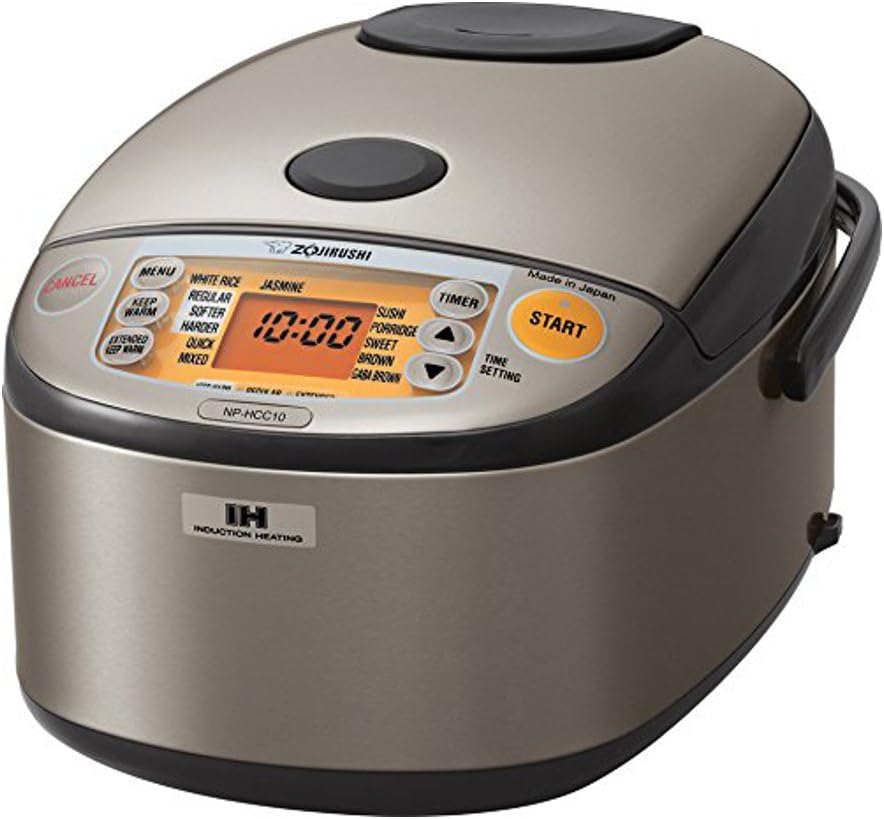
Rice cookers have evolved significantly over the past two decades. What once was a simple one-button appliance has transformed into a sophisticated kitchen device capable of producing remarkably consistent results. Among the various rice cookers available, induction heating models represent a notable advancement in cooking technology. The Zojirushi NP-HCC10XH represents one example of this category, featuring an induction heating system designed to manage temperature and heat distribution during the cooking process.
Understanding how different rice cookers work and what features they offer can help you make an informed decision about whether a particular model aligns with your cooking habits and kitchen needs. This article explores the characteristics, functionality, and practical applications of induction heating rice cookers, using the NP-HCC10XH as a reference point for discussing this technology category.
What Induction Heating Technology Means in Rice Cooking
Before diving into the specific features of this model, it’s helpful to understand what induction heating actually does and how it differs from traditional heating methods in rice cookers.
Most basic rice cookers rely on a simple heating element located beneath the cooking pot. When you press the cook button, this element heats up, warming the cooking vessel and the rice inside. Once the temperature reaches a certain point, a thermostat typically triggers the switch to a warming mode. This approach has been used for decades and generally produces acceptable results for everyday rice cooking.
Induction heating technology operates differently. Rather than using a direct heating element, an induction heating system creates a magnetic field that heats the cooking pot itself. The pot essentially becomes the heat source. This approach offers several theoretical advantages. The heating can be more precise and responsive, adjusting rapidly to temperature changes during the cooking cycle. The heat distribution around the pot can be more uniform since the entire vessel is being heated rather than just the bottom section.
In rice cookers specifically, induction heating systems allow for more granular control over the cooking process. Different stages of rice cooking—initial water absorption, continued heating, and final settling—can be managed with different temperature profiles. This level of control is what manufacturers suggest can lead to more consistent texture and quality results across different types of rice.
The Zojirushi NP-HCC10XH incorporates this induction heating approach as its primary cooking mechanism. The system is designed to manage the heating cycle automatically, adjusting temperatures and timing based on the cooking stage.
Key Features of the NP-HCC10XH
Capacity and Design
The 5.5-cup capacity (measured using the standard rice cooker cup, which is approximately 180 milliliters) makes this model suitable for small to medium-sized households. A 5.5-cup rice cooker can typically prepare enough cooked rice for 5-7 people in a single batch, depending on portion sizes and appetite.
The stainless steel exterior in a dark gray finish provides a contemporary appearance that fits with modern kitchen aesthetics. Stainless steel is durable and relatively easy to maintain, requiring only occasional wiping to keep it looking clean. Unlike plastic-bodied cookers, stainless steel units tend to feel more substantial and can withstand minor bumps and handling better.
Induction Heating System
The induction heating system is the primary distinguishing feature of this model. Rather than a conventional heating element, this technology uses electromagnetic induction to heat the cooking vessel. The system is programmed to follow specific temperature curves during the cooking process, theoretically resulting in more precise control over cooking conditions.
Cooking Programs
The NP-HCC10XH typically includes multiple cooking settings for different rice varieties and preparations. Most Zojirushi models in this category include settings for white rice, brown rice, mixed grain, and often specialty rice types. Different rice varieties have different moisture absorption rates and cooking times. By using a dedicated setting for each type, the cooker can adjust its heating cycle accordingly.
Beyond basic rice cooking, many models in this category include functions for other purposes. Some versions offer settings for cooking porridge, steaming vegetables, or preparing other grain-based dishes. These extended functions add versatility, though rice cooking remains the primary purpose of the appliance.
Display and Controls
The control interface typically includes a digital display showing the current status of the cooker. This might include information about which cooking program is active, the current stage of cooking, or estimated time remaining. A control panel with buttons allows you to select cooking programs, set delayed start timers, or access additional functions.
Inner Pot Design
The inner cooking pot is usually designed with a non-stick coating to prevent rice from sticking and burning on the bottom. The shape and thickness of the inner pot contribute to heat distribution. The pot is typically removable, allowing for easy cleaning and serving directly from the pot if desired.
How Induction Heating Rice Cookers Are Used
Basic Rice Cooking Process
Using an induction heating rice cooker follows a straightforward process, though the technology working behind the scenes is more complex than conventional models. The basic steps are:
First, measure your desired amount of rice using the included measuring cup. Rice is typically sold in cups, and using the standard rice cooker cup ensures consistency. Rinse the rice under cold water in a separate bowl, gently stirring with your fingers. This step removes excess starch from the rice surface and is a common practice in many cuisines. While some sources suggest this step is essential, others note that it’s optional depending on your preference for rice texture.
Next, transfer the rinsed rice to the inner pot and add water according to the rice-to-water ratio specified in the instruction manual. This ratio varies depending on the type of rice you’re cooking. Short-grain white rice typically uses a 1:1.1 ratio (one cup rice to 1.1 cups water), while brown rice requires more water due to its harder outer hull.
Place the inner pot into the cooker body, close the lid, and select your desired cooking program using the control panel. Press the cook button to begin the cycle. The induction heating system will activate, following its programmed temperature sequence for the selected rice type.
During cooking, the cooker manages all temperature adjustments automatically. You don’t need to monitor or adjust anything manually. The entire process, from start to finish, typically takes 30-60 minutes depending on the rice type and quantity.
Once the cooking cycle completes, the cooker automatically switches to a warming mode, maintaining the rice at a safe serving temperature until you’re ready to eat. This warming function typically keeps rice hot for several hours without significantly degrading quality.
Cooking Different Rice Varieties
Different rice types benefit from different cooking approaches, and this is where the multiple cooking programs become relevant.
White short-grain rice cooks quickly and absorbs water readily. The cooking cycle for white rice is typically the shortest, usually 20-30 minutes. Long-grain white rice takes slightly longer, sometimes 35-45 minutes, because the grains are longer and take additional time to fully hydrate.
Brown rice presents different challenges. The outer bran layer is harder and takes longer to soften. Brown rice cooking cycles are substantially longer than white rice, sometimes taking 50-60 minutes or more. The cooker’s brown rice setting accounts for these differences by adjusting the temperature profile and cooking duration accordingly.
Mixed grain or multi-grain rice combines different varieties and types of grains. These require careful timing because different grains hydrate at different rates. The mixed grain setting attempts to balance these differences to produce a finished product where all components are cooked appropriately.
Some specialty rice varieties, such as arborio or sushi rice, have specific cooking requirements. Depending on the model and available programs, you may be able to select a setting optimized for these varieties, or you may need to use the white rice setting with adjusted water ratios.
Extended Uses Beyond Rice
While rice cooking is the primary function, many induction heating cookers can be used for other purposes. Some models include porridge or congee settings for cooking rice in a much higher water-to-rice ratio, creating a thick soup-like consistency popular in many Asian cuisines.
Steaming trays that fit inside the cooker allow you to steam vegetables, dumplings, or other foods while rice cooks below. The rising steam cooks the items on the tray while the rice cooks in the pot. This approach enables you to prepare complete meals in a single appliance.
Cooking other grains like barley, quinoa, or oats is sometimes possible, though success varies. The instruction manual typically specifies which grains can be cooked and what water ratios to use. Since these grains have different moisture absorption characteristics than rice, using the appropriate settings or adjusting water levels becomes important.
Who Might Find This Type of Cooker Suitable
Households Prioritizing Consistent Results
If you’re someone who values consistency in your meals, an induction heating rice cooker appeals to you. The technology’s ability to adjust heating throughout the cooking cycle means that results tend to be more uniform batch-to-batch. This matters if you cook rice multiple times weekly and want similar texture and quality each time.
People Who Cook Rice Frequently
For households where rice is a dietary staple—particularly those following Asian, Latin American, or Middle Eastern cuisines—a quality rice cooker is a worthwhile appliance. The 5.5-cup capacity serves small to medium families well. If you have a larger family or frequently cook for guests, this capacity might require cooking rice in multiple batches.
Home Cooks Interested in Grain Variety
The multiple cooking programs mean you can confidently cook different rice varieties without guessing at water ratios or cooking times. If your diet includes various grains and rice types, having a cooker with dedicated settings removes the guesswork.
Those Seeking Time Efficiency
A rice cooker’s primary advantage is freeing up your attention. You can load the cooker with rice and water, select a program, and proceed with other cooking tasks without monitoring anything. The delayed start timer function (typically available on these models) lets you set the cooker to begin cooking at a specific time, allowing cooked rice to be ready exactly when you need it.
Kitchen Space Considerations
At 5.5-cup capacity, this model represents a moderate size—larger than basic two-cup cookers but smaller than commercial or large family models. It’s suitable for kitchens with limited counter space while still providing practical capacity for most household situations.
Important Considerations Before Purchasing
Understanding Your Rice Cooking Needs
Before investing in any rice cooker, honestly assess how much rice you actually eat and how often you cook it. If rice is an occasional side dish prepared a few times monthly, a more basic cooker might serve your needs adequately. The induction heating technology represents an optimization that’s most valuable when you’re cooking rice regularly and want consistency.
Capacity Matching Your Household
The 5.5-cup capacity is moderate-sized. Calculate typical serving needs: if your household includes four people and rice is a main component of dinner, you’ll likely use this cooker several times weekly. For larger families, this size might feel limiting. For smaller households or individuals, the capacity might exceed regular needs (though leftover rice stores well in the refrigerator).
Learning Curve and Interface
While modern rice cookers are generally intuitive, different models have different control interfaces. Some use touchscreen displays, while others use traditional buttons. Spending time reading the instruction manual before first use ensures you understand all available features and settings. This particularly matters if you want to use the delayed start feature or access specialty cooking programs.
Maintenance and Cleaning
Induction heating cookers require regular cleaning to function properly. The inner pot should be washed after each use. The exterior should be wiped clean occasionally. Unlike some appliances, rice cookers are relatively low-maintenance, but neglecting regular cleaning can lead to buildup or performance issues.
The instruction manual typically specifies whether the inner pot is dishwasher-safe or should be hand-washed only. Some non-stick coatings are sensitive to high heat or harsh abrasives, so following specific cleaning recommendations extends the appliance’s lifespan.
Warranty and Support
Zojirushi products typically come with manufacturer warranties covering defects. Understanding what the warranty covers, how long it lasts, and the process for claiming warranty service is important. Check whether replacement parts like inner pots or lid seals are available if those components wear over time.
Energy Consumption
Induction heating cookers tend to be reasonably energy-efficient compared to using a stovetop to cook rice, though specific energy consumption varies by model. If electricity costs are a concern in your region, the instruction manual typically provides information about power consumption during cooking and warming cycles.
Noise Considerations
Some induction heating cookers produce audible humming during operation due to the electromagnetic field. The volume varies by model. If you have a small kitchen where the cooker operates near living areas, or if low noise is important to you, this factor might be worth investigating through user reviews focused on operational noise levels.
How Induction Heating Compares to Other Cooking Methods
Versus Traditional Heating Element Cookers
Traditional rice cookers with basic heating elements are usually significantly less expensive. They cook rice adequately for most purposes and have been the standard for decades. The main trade-off is that temperature control is less precise, which can mean slightly more variable results batch-to-batch. They’re appropriate if you value simplicity and cost over optimized consistency.
Versus Stovetop Cooking
Cooking rice on the stovetop gives you complete control over heat and timing, but requires active monitoring. You must watch for when water begins boiling, adjust heat levels, and determine when rice has finished cooking. This approach demands attention and presence. A rice cooker eliminates this attention requirement while typically producing comparable or better results.
Versus Pressure Cookers or Instant Pot Style Appliances
Pressure cookers cook rice dramatically faster—sometimes in 5-10 minutes—by using steam pressure to raise cooking temperature above normal boiling point. However, they require more technique to avoid mushy rice and have a steeper learning curve. Rice cookers offer a gentler, more forgiving approach. Which method suits you depends on whether you prioritize speed or ease.
Versus Clay Pot or Donabe Cooking
Traditional clay pot rice cooking produces distinctive flavor and texture through specialized heat distribution. These methods are more labor-intensive and require more skill. Rice cookers offer convenience that traditional methods don’t, though some argue the taste isn’t quite equivalent. This represents a choice between convenience and traditional technique.
Frequently Asked Questions
Q: How much uncooked rice does a 5.5-cup capacity represent in terms of servings?
A: A single rice cooker cup (approximately 180 milliliters) of uncooked rice yields roughly 3 cups of cooked rice, serving approximately 2-3 people as a side dish with vegetables and protein. A 5.5-cup capacity can therefore serve 9-16 people as a side dish, though exact servings depend on appetite and what else is being served.
Q: Is rinsing rice before cooking necessary?
A: This depends on the rice type and your preference. White rice is often rinsed to remove surface starch, resulting in fluffier, less sticky rice. Brown rice and some specialty varieties sometimes don’t require rinsing. The instruction manual may provide specific guidance for different rice types. Rinsing adds a step but many people find it produces preferred texture.
Q: Can this cooker cook foods other than rice?
A: Many models in this category can cook other grains and prepare porridge or congee. Some can steam foods using a separate tray. The instruction manual specifies which functions are available and how to use them. It’s worth checking your manual to understand all capabilities.
Q: How long does the warming function maintain rice at serving temperature?
A: The warming cycle typically keeps rice safely heated for 4-8 hours after cooking completes, depending on the model and room temperature. After extended warming periods, rice quality gradually declines as it continues to dry out. For best quality, consume rice within a few hours of cooking.
Q: What if the cooked rice is too soft or too hard?
A: This usually indicates incorrect water-to-rice ratio or an incorrect cooking program selection. Consult the instruction manual for proper ratios for your specific rice type. If using a new rice variety or brand, you may need to experiment with slight adjustments. The manual also explains how to adjust water ratios if you prefer firmer or softer results.
Q: Is the inner pot removable for easy cleaning?
A: Yes, the inner pot lifts out of the cooker body for cleaning. Most are hand-washed rather than dishwasher-safe to protect non-stick coatings. Check your manual for specific cleaning instructions. Removable pots make the cooker easier to maintain than fixed inner vessels.
Q: How do I use the delayed start timer feature?
A: You measure rice and water, place them in the inner pot, close the lid, then use the control panel buttons to set your desired start time. The cooker will remain dormant until that time, then automatically begin cooking. This feature is useful for having rice ready at a specific mealtime. However, delayed start should only be used with recipes and methods specified in your instruction manual, as extended waiting times before cooking begins can affect rice quality.
Q: Can I open the lid during cooking to check progress?
A: This is generally not recommended. Opening the lid releases steam and disrupts the cooking cycle, potentially affecting results. The cooker’s automation is designed to work without intervention. If you’re concerned about cooking progress, waiting until the cycle completes is better than interrupting it.
Q: What’s the warranty coverage?
A: Zojirushi products typically come with manufacturer warranties, but specific coverage varies by region and retailer. Check the documentation that comes with your cooker or the manufacturer’s website for current warranty details, coverage scope, and claim procedures.
Q: How does induction heating technology affect what cookware you can use?
A: The inner pot is specifically designed for your cooker model. You shouldn’t substitute the inner pot with cookware from other sources, as the heating system is calibrated for the specific pot that comes with the cooker.
Conclusion
Induction heating rice cookers represent a technological evolution in kitchen appliances designed for a specific purpose: cooking rice consistently and conveniently. The Zojirushi NP-HCC10XH exemplifies this category with features like precise temperature control, multiple cooking programs for different rice varieties, and a moderate 5.5-cup capacity suitable for small to medium households.
Whether this type of cooker suits your needs depends on several personal factors: how frequently you cook rice, what varieties you prepare, whether consistency matters to you, and how much counter space you have available. For people who eat rice regularly and value convenience and consistent results, an induction heating rice cooker can be a practical addition to the kitchen. For those who cook rice occasionally or prefer stovetop methods, simpler and less expensive options may be equally suitable.
The technology behind induction heating is genuinely different from basic heating elements, offering more precise temperature control throughout the cooking cycle. This precision translates to more consistent texture and quality across different batches—an advantage that’s most meaningful when you’re cooking rice frequently.
Taking time to understand your rice cooking patterns, reading through the instruction manual thoroughly, and considering your household size and kitchen space will help you determine whether this appliance aligns with your actual needs rather than aspirational cooking habits.